Armagh To County Tyrone: Songs Of Lost Borders
The human cost behind the lines
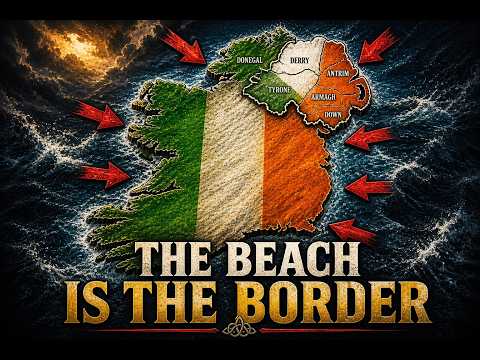
The lyrics of The Beach is the Border throw you straight into a moment Irish people still argue about: the years around 1916–1923 when hopes, betrayals and political deals reshaped this island. The song’s refrain — “the beach is the border” — isn’t just a slogan. It points to a stubborn, island logic: that the sea marks the edge of a nation, not an invisible line cutting through communities.
From the 1916 Rising to the War of Independence and the Treaty of 1921, ordinary lives were upended. Young men who’d fought the Crown in skirmishes and ambushes came home to find family plots, livelihoods and neighbours divided by a decision made in Westminster. The Government of Ireland Act and the subsequent partition created Northern Ireland, leaving six counties — Armagh, Down, Antrim, Fermanagh, Derry and Tyrone — under a separate administration. That’s the territory the song lists, and you can hear the ache in the call to “bring them back home.”
There’s another layer: the bitterness aimed at 1922. For many nationalists the Treaty and the emergence of the Free State felt like a sell-out — a break with the dream that had driven volunteers into rebellion. The Civil War that followed pitted brother against brother in towns and country lanes. People lost more than lives. Trust between neighbours frayed, businesses slipped into uncertainty, and emigration spiked. Working-class families, smallholders and women running households were left to pick up the pieces.
The song channels that mixture of pride and grievance. When it points to “puppets in nineteen twenty two,” it’s echoing a common feeling: that political bargains sidelined ordinary voices. Yet the language is simple and direct, calling people to rise not with abstract rhetoric but with memory — of Torment and Famine, of marches and funerals, of streets where men and women kept the flame alive.
As a piece of music, The Beach is the Border sits in a living conversation between history and feeling. It’s useful because it forces you to listen to what partition meant on the ground — the families split by lines on a map, the towns that traded under two different authorities, and the long-weathered hope that the island’s shores ought to define it, not a border drawn inland.
If "The Beach is the Border" struck a chord, our Traditional Irish Music on YouTube has hundreds of similar Irish songs and ballads.
You can stream "The Beach is the Border" any time on Irish Trad Music on Spotify.
Explore more Irish music stories at Virtual Magic Music.


Comments
Post a Comment