Green Fades, Spirit Survives — Whispers of the Gael's Quiet Resolve
Reading the Images
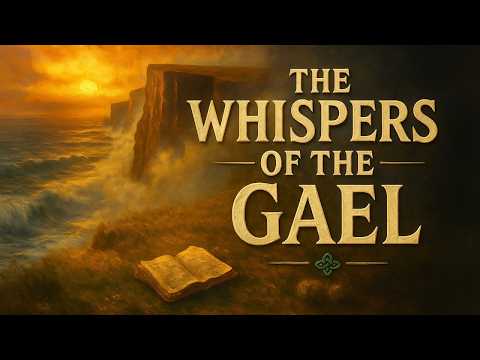
What grabs you first in "Whispers of the Gael" is how plain, almost conversational lines open into big, painterly images. That first couplet — "In the year of seventy-nine, the sails came to shore" — drops you at a historical moment without ceremony. It’s not a textbook date; it’s a wave, a shoreline, a shadow passing across the land. The writer prefers a scene to a lesson, and that makes the politics feel lived-in rather than merely argued.
The chorus gives us a neat paradox: "Oh, the green is fading, but it’s still alive." That two-part claim sets the whole emotional tone. Green as colour becomes green as memory and identity; fading suggests loss and erosion, but the immediate rebuttal — it’s still alive — turns the lament into a stubborn fact of survival. It’s a simple structure, but its economy is effective. Repetition here is like a drumbeat: the words keep coming back so the feeling stays under the skin.
There are smaller images that do a lot of work. "The language of the poets" is a compact synecdoche for a whole cultural world — not just words, but the forms that shape feeling. And when the lyric says "the fires still burn in the hills and the glen," it moves us from the classroom punishment of language to a physical continuity: flame, landscape, the idea that culture lives in place as well as in speech.
The line "the whispers of the Gael call out your name" is intimate where many of the other lines are collective. A whisper is private, but it contains a summons. That phrasing turns heritage into a call to action: modest, persistent, personal. The final stanza’s instruction, "So sing it in Irish," reads less like an order and more like a revival strategy delivered in plain terms. You can almost hear the singer leaning in, nudging the listener.
What I like most is the balance between heartbreak and hope. The imagery moves between cliff-edge drama and domestic persistence, and the metaphors are unflashy but precise. "Whispers of the Gael" doesn’t preach; it sketches a landscape, names the losses, then points to how the language and songs might be kept alive. It feels like a close-up portrait rather than an epic, and that’s why the images stay with you.
Hear more from our catalogue on the Irish Ballads on YouTube.
For more like this, browse the rest of Virtual Magic Music.


Comments
Post a Comment